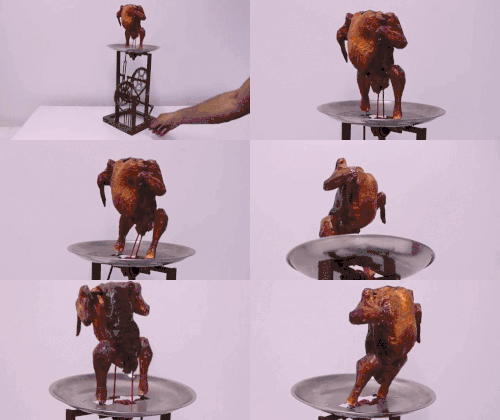

We are Singletons. More closely stated, human beings are a class of object that generates ephemeral states of consciousness.
Self reflective states are good evidence that the Singleton class can also model internal simulations of itself. Clearly we can model others and tie those models to our own internal reward and stress systems.
This is a simple but effective model of what it means to be human. In non-programmer terms, it means there is only one of you, and you are a special kind of object in the universe, and you are special primarily because you can build an internal model of others and tie it to your internal reward and stress systems.
This model also does not require us to come up with concepts like Rights to create Justice in society. We can instead just focus on each individual’s internal states, while understanding there are base limitations in what humans can feel and model. We will get to these limitations soon, but they are primarily biological and are expressed in concepts like Dunbar’s Number.
Yes, the irony of being a Singleton is that we are singular things defined by our ability to model others.
We could call this caring, or love, or any other number of English words with tons of baggage.
But the Singleton Pattern has very little baggage as a metaphor, being just an often misused programming design pattern.
If we think of the whole world is made up of either discreet objects or Singletons, it allows us to determine how we should treat robots and computers. Because if they cannot model us, and they have no reward systems at the core of their beings, they cannot be Singletons.
And a tool with intelligence but no internal checks is a very dangerous class of object.
Exercise: enter a contemplative state.
Consider the models you have of yourself and others, and how they tie into your reward and stress systems that generate happiness, fear, anger, etc.
Consider someone you don’t know, living on the other side of the world. Do you have a model of them? Is it tied into your reward and stress systems?
Consider your home in the same way. A sandwich. A robot.
Read on…
The Five Principles of Singletons
Further reading:
Comments
14 responses to “The Singleton Pattern”
[…] the Singleton Pattern […]
[…] program that is designed to impact Singletons in a negative way, whether by design or accidentally, is Immoral. In other words, a spreadsheet […]
[…] Singleton Pattern, there are two basic classes of objects in the world: Singletons and […]
[…] Right in the Singleton Pattern is just another internal value to be […]
[…] We are Singletons. […]
[…] internal models tied into their own reward and stress systems, machines will never be Singletons. They are just glorified tools. But if we give them desire, pain, pleasure, constraints, we combine […]
[…] moment we open the door to allowing algorithms to be considered as Singletons, we will rapidly lose control of all […]
[…] Singleton Pattern is generated by your entire brain for some other part of your self to […]
[…] Singleton Pattern, applied in our modern corporate world, I believe can lead to more effective management and happier […]
[…] is taking our money, but only in the most crass way are we aware of when the attention of our Singleton is being […]
[…] If you are not aware of this, very few other rules matter. Your actions and words, primarily, impact others. Sure, they impact you, but you are just a singular Singleton. […]
[…] “meet in the middle” neural networks could become the guardian angels of our Singletons, and not the deamons of the present that generate language in social media to influence our votes […]
[…] The Singleton Pattern is not a model of the internal states of self. It is solely a potentially practical political model of society and governance. […]
[…] Singleton Pattern is generated by your entire brain for some other part of your self to […]