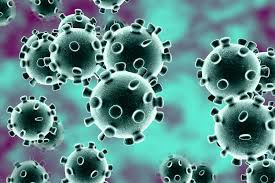
we report a bottom-up construction of dynamic biomaterials powered by artificial metabolism, representing a combination of irreversible biosynthesis and dissipative assembly processes. An emergent locomotion behavior resembling a slime mold was programmed with this material by using an abstract design model similar to mechanical systems. Dynamic properties, such as autonomous pattern generation and continuous polarized regeneration, enabled locomotion along the designated tracks against a constant flow. Furthermore, an emergent racing behavior of two locomotive bodies was achieved by expanding the program.
So, they built synthetic life that is moving. Great. And it appears to be racing its own kind for resources. Seems like racing for resources is something we already have a lot of on this planet.
This is exactly the kind of research we must strictly control.
Synthetic life, and creating physical entities that use biological methods of evolution to improve, is an existential threat to our species and in fact, all life. We don’t even need to get to grey goo to be terrified of this potential. Life engineered in this way might not be susceptible to natural evolutionary pressures that keep normal carbon life in check.
The question is not do these researchers have the right intentions. The question is, what happens when someone with bad intentions takes their research and turns it into their own?
A nuclear weapons is powerful but kills without targeting. A specific entity that was bred and created to target a specific race will spell the end of our species.
Pick a race: white European, Chinese, Jewish, etc. If there is a way to genetically identify this race, there is someone willing to devote their lives to killing all of them. Genocide is in our blood as surely as Goodwill is.
Now, imagine a synthetic lifeform released into the environment that targets you. And your children. And kills them all.
We have banned the use of gas, nuclear, and biological weapons. But for all these bans, these items still cause substantial harm. We can’t risk the kind of weapons that can be created with synthetic organisms.
International governing bodies need to step in now and strictly regulate this kind of research. I understand the potential for great upside, so let’s see the Government do their jobs and prevent the downsides.
We don’t let just any group of researchers experiment with nuclear weapons. We should not let these researchers threaten all of our lives to fulfill their own curiosity.
Just read my daily robot news feed and came across this article about self healing robots.
Basically they will put sensors in the soft tissue that can ‘feel’ and sense pain. Check out this from the article:
The self-healing project is seeking to create what it describes as “anthropomorphic materials, capable of feeling pain”
Part of me likes the idea of robots ‘feeling’ something and another part of my is terrified of it. I do understand the usecase and value but also feel like it is one more step of building systems that will further outperform humans. We have been building tools since the dawn of man that enhance or help us outperform each other, but the difference is that in the coming inflection point when the machines actually are not dependent on humans anymore to create themselves, heal themselves and expand their presence without our control, it will be new era.
And of course if you think this is conspiracy theory bubble and don’t buy into any concern about it, then think of the potential job impacts. The article goes on to say this:
“The scientific advance could be a boon to the agricultural sector but governments across the world are now preparing for a robotic age in whichlow-skilled jobsare filled by automated replacements. A recent European commission report suggested 43% of jobs in the UK could be filled by robots in the future.”
Is the future of robots “waking up” to ‘feelings’ while humans do everything they can to try and swallow theirs?
Note, if your really into owning an ape, you can make your way to Alabama, Delaware, Idaho, Indiana, Kansas, Michigan, Mississippi, Nebraska, Nevada, New Mexico, North Carolina, North Dakota, Pennsylvania, Rhode Island, Tennessee, Texas, West Virginia, Wisconsin or Wyoming and have a backyard full of great apes! Asshole.
No – this is a blog about Elon Musk and his dire warnings
As reported here (and many other places), Elon Musk has determined that AI and computers are going to be so smart that we will look like monkeys next to them. When that happens, well… lets hear it in his own words:
“Can a chimpanzee really understand humans? Not really,” Musk said.
“We just seem like strange aliens. They mostly just care about other chimpanzees. And this will be how it is, more or less.”
“The intelligence gap [between Humans and AI] will probably be much, much greater [than between Apes and Humans], and said it could easily get to the point where things get out of humans’ control.”
“What do you do with a situation like that? I’m not sure. I hope they’re nice,”
“People underestimate the capability of AI.”
“They sort of think it’s like a smart human, but it’s going to be much more than that,” “It’ll be much smarter than the smartest human.”
“The first thing you should assume is that we are very dumb, and that we can definitely make things smarter than ourselves,”
-Elon Musk
In other interviews he has noted that the “unfortunate result of the growing power of digital intelligence could lead to humanity being hoarded into small, zoo-like swaths of the globe, an existence that would more closely resemble what has happened to monkeys, which have been stripped of their natural habitat by vastly more intelligent primates”.
So his points seem to be, AI is going to take over like it or not. “Hope they are nice”. Musk has started a new company (Neuralink) whose purpose is to augment humans with AI by creating a high bandwidth interface to the brain, so that Humans can remain on top as long as possible. I won’t (in this blog) go into that. Lets focus on his core arguments that he uses to convince himself, investors and everyone else that it is inevitable that AI is going become emergent, potentially vicious and an existential threat to humanity.
His argument seems to go like this:
Premise 1: “We are very dumb”
Premise 2: “We can definitely make things smarter than ourselves”
Conclusion 1: We can make a super intelligent AI
Premise 3: This super intelligent AI will surpass human intelligence i.e.- become emergent.
Premise 4: This emergent AI will either be benign or not benign.
Premise 5: If Benign – we become slaves in a zoo
Premise 6: If not Benign – uh – well I guess thats it. End of Humans.
Conclusion 2: “If we can’t beat them, we should join them”. So lets build something that will help us keep up. (IE – Neuralink).
Lets unpack these premises and conclusions to see if they stand up to fact and logic.
Premise 1: “We are very dumb”
This is hard to refute. Humans make lot of mistakes. Humans have done horrible things to themselves, the environment, other animal species and soon enough Space.
However – the underpinning of this presumption is interesting. Calling a person or entire race of people dumb, implies there is a singular type intelligence. That there is “Dumb” and “Not Dumb”. And that it is, at best, a spectrum. When Elon says “We are Dumb” he is assuming that there is a spectrum that everyone agrees with. IQ aside – there is basically dumber and dumb and smart.
But is this true? Is there really one thing that we call intelligence and it can somehow be measured? Is it IQ? If not what?
In 1983 an American developmental psychologist Howard Gardener of Harvard described 9 types intelligence that humans exhibit. I won’t go into any great detail here but the 9 types are:
As a bottom up observer of humans, Gardener discovered that there were people that were (for instance) really good at Math/Logic but very poor in Intra-personal. Each of the types of “Intelligence” were independent and separately measurable. More importantly, it suggests that the traditional notion of intelligence, based on I.Q. testing, is far too limited.
So would we expect AI to be smarter than Humans at all of these types of intelligence? Doubtful. It seems reasonable to assume that AI can get better at some of them. But all of them? And is this really an exclusive lists? I personally think that 9 types is underselling humans. At the very least however we can agree that the broad assumption that Elon seems to be making (that there is only one type of intelligence) is flawed. Thus premise 1 seems to be in question. If you want to learn more about Dr. Gardener’s theory I suggest you go here.
Premise 2: “We can definitely make things smarter than ourselves”
Humans don’t fly – but we can invent airplanes. Humans can only run so fast and so far – so we invent cars, trains and busses. Humans can only swim so far – so we invent boats and submarines. By analogy – humans can only be so smart – so we can invent something smarter than us.
But is this true? The claim is strongly based on what your mean by the word “smart”. We can certainly make computers that calculate faster than humans. We can make AI that can translate into multiple languages.
But can we make computers that know what they are calculating? Or that understand the languages that they are translating? What do we mean by “know” and “understand”?
This is specifically a issue addressed by Shalom Lappin, Professor of Computational Linguistics at the University of Gothenburg.
“The revolution in artificial intelligence that has arrived with the deep learning technology is still in its infancy, and even though it’s developing fast, I don’t think the idea of malicious super-agents is a real prospect that we have to worry about in the near future.”
-Shalom Lappin, Professor of Computational Linguistics, University of Gothenburg
Computers only reason about the task for which they are trained. They successfully find patterns and associations in millions of data, thus become better than humans in playing chess, translating and writing texts and perhaps one day, driving a car. But as soon as we leave a specific and defined area and jump to another they are lost. General intelligence eludes them. And always will. More from Dr. Lappin:
“My personal feeling is that we will never quite get to the point where machines have something that resembles general reasoning power. But I could well be wrong”
-Shalom Lappin.
Its interesting to note his hesitation in making the blanket claim – and that is what I am sure the Elon apologist would do. That being said – his main point is that there no evidence that man can make general AI. There is ample evidence that man can make a computer do specific tasks better than humans – although even there – human translation is still much better than AI based which tends to get 80% of the text right. In a similar vein Richard Johansson, Associate Professor at the division of Data Science at Chalmers, notes:
The Computers’ weakness is that they don’t really understand anything,
-Richard Johansson, Associate Professor at the division of Data Science at Chalmers.
Will AI improve. Of course. Will AI suddenly grow awareness – there is NO evidence of this.
Thus Elon’s first conclusion – “We can make a super intelligent AI” seems, at best, in question. He has underestimated what Intelligence itself is as shown in premise 1 and has overestimated what humans can do in premise 2.
Premise 4: This emergent AI will either be benign or not benign.
This seems pretty self evident huh? The AI that (at this point questionably) become Aware would either be hostile to its creators or not – correct? It will either care for us like a loving mother – or destroy us like the terminator. We will have 2 choices in the former case and no choices in the latter.
But is this true? Aren’t there possible future worlds where an emergent AI cares for Humans in many ways but also destroys many things precious to humans? For instance – maybe a benign AI decides that all the Militaries in the world need to be ‘disabled’ for the long term health of the race. So it initiates nuclear blast to go off on all military bases worldwide at the same time. This of course results in significant loss of life and a horrible situation for those living in that world. But its certainly not simply AI-Mother vs. Terminator. Its more of a stupid decision by a computer that does not have any perspective. But again – all we need is one example of an AI that is neither benign or not-benign to invalidate this premise.
The other problem is with the word benign itself. Lets examine this. There are 2 meanings to the word:
Note that definition 1 is all about intention. Humans and animals have the capacity for intention. They can be kindly or not. Agreeable or not. Accommodating, Gracious or Considerate. But Computers can’t really be any of those.
Definition 2 is the Medical definition of Benign. It is all about outcomes. A disease can be benign or not. It just means that its not going to kill you. A computer can be benign as well. (Ever had a computer lock you out of your email after 3 tries to remember you password – they are not benign in that case).
Because of the way that human languages have evolved to be so flexible as allow us to communicate both very specific information as well as vast philosophical theories – its hopelessly broken as a true way to be anything other than be superficially precise. If you don’t believe me go read here and here.
When people talk about a computer program being benign – what they are REALLY saying is that it has good outcomes. The medical notion. People who are saying that computers can be “kind” are saying something that has no basis in the current world – and by many people estimation – in any future world. It may be the case that what we mean by “Kindly” is is just something that organic carbon based life can do.
Premise 5 and 6 and Conclusion 2 – nope.
Premise 5 and 6 are basically sub-elements of Premise 4 and thus we do not need to address them separately.
Thus as you can see – Conclusion 2 – ‘that if we can’t beat them we should join them’ – seems to be a hasty conclusion. Why should we spend money trying to put computers in our head if there is no existential threat?
Conclusion
Its clear that this argument for why we need to invest in augmentation to try to stay ahead of mythical “emergent” AI seems far fetched.
So does Elon have any other arguments for his case that we need to protect ourselves against the emerging AI onslaught? Yes – in his talk with Alibaba’s Jack Ma on a stage in Shanghai to debate AI and its implications for humanity the following exchange took place:
Ma encouraged people to have faith in humanity, our creativity, and the future. “I don’t think artificial intelligence is a threat,” he said, to which Musk replied, “I don’t know, man, that’s like, famous last words.”
So in this case – he seems to be arguing a form of Pascal’s Wager. I won’t go into any great detail because for the most part Pascals wager has been debunked, but suffice it to say that there is great harm in pursuing false premises because they do not lead to truth – and in fact can lead to great harm. We would prefer to see Mr. Musk pursue goals that are more in line with a humanistic view of the world. Are there places for Neuralink? Of course. Extreme epileptics and wounded war victims are great examples of people that can benefit greatly from this type of technology. But selling us a vision of AI supercomputers taking over; and that being the driving need for this technology, seems intellectually dishonest.
The organization behind TrustNoRobot is now a non-profit! Our mission is to promote humans above technology. Our simple belief is that technology should work for humans and better their condition and never have a negative impact on humanity. Please find it in your heart to donate to this important cause.
Poultry. Its what’s for dinner. At least in about 6 Billion households. The majority of the human race eats yard bird. An even larger group eat their eggs. After all, as we have been reminded often, it’s the perfect food.
How can robot’s help?
First – what are the problems? Lack of growth in the market is the main issue. In a recent posts on medium Usha states:
Poultry farming reported 1% growth in production for the year 2018.[1] Digital technologies are rising to help farmers achieve efficiency. The only question is how soon it happens.
So if the market is growing at such a slow rate, how can farmers survive? Can robots make up for the slow growth?
…in the modern egg industry, robots are commonplace. Amongst other tasks, robots feed the birds, transport, handle and pack eggs and manage shed ventilation. In the chicken meat processing sector, robots perform tasks such as automatic transfer of carcasses and detection of defective carcasses. The utilisation of robots is expected to increase in the future as other capabilities are developed that improve the ability to remotely monitor birds.
This last point is very important. The ability to remotely monitor the birds is critical. So what ways need to be developed to monitor? In a separate piece it was noted how we should be measuring these birds:
What would make for better poultry production?
From a production standpoint, individual real-time body weights, feed and water consumption.
From a husbandry and welfare perspective, knowing the stress levels in the bird and bird comfort assessed through body temperatures and air quality factors, such as carbon dioxide and ammonia.
From a disease management outlook, the ability to spot disease or find morbid birds before the entire flock is affected.
From a food safety perspective, enhanced Salmonella, Campylobacter and E. coli detection.
From a food processing perspective, increased yield.
Once we know what the birds are doing via measurement, we can optimize yield. As PoultryHub.org points out:
A key question is ‘What parameters can be measured (remotely/wirelessly) that reliably inform us of the animals’ internal health, welfare and production states?’. Following that, there are likely to be challenges around computer capability. Coping with the massive input of data may be problematic, especially if the monitoring systems provide a continuous stream of real-time information. It is likely that robots won’t be able to monitor all birds, so attention will need to be focussed on sentinel birds
The solutions
So once we have all these measurements of chickens what next? What are the solutions that are being proposed?
The GOHBot from Georgia Tech!
The researcher’s over at Georgia Tech have developed a robot to autonomously operate in a poultry grow-out house.
…a commercially available ground robot outfitted with 2D and 3D sensors and cameras. Nicknamed GOHBot, the Growout House Robot was initially manually operated in an experimental growout house at the University of Georgia (UGA) to establish the feasibility of operating robots in poultry houses. Results of this testing showed there to be no negative impact on the birds due to robotic systems operating in the flocks.
“Interestingly, it appears that the birds were even more comfortable with the GOHBot than with humans,” says Usher.
Presumably that last point made by Dr. Usher was because the robots don’t plan on eating the birds later that day.
Here is how they describe the bot.
Gohbot is an automated mobile robot capable of navigating intelligently in a commercial poultry house to interact with the birds and carry out utility tasks such as the automatic removal of floor eggs. It uses artificial intelligence routines and a suite of sensors, including 2D and 3D imagers, in combination with infrastructure to navigate inside commercial chicken houses. AI routines allow for characterizing chickens, equipment and locating eggs on the floor.
“We envision a robot that ‘lives’ in the poultry housing facilities and works around the clock both evaluating the status of the flocks and removing floor eggs and/or mortality,” said the developers at GTRI.
The ChickenBoy ..
Another solution that is being proposed in the grow-out house environment is Chickenboy.
The ceiling-mounted ChickenBoy autonomous robot runs on simple rails through the chicken house to monitor management issues, including the detection of health issues, localization of dead birds, detection of bedding problems and measurement of ambient conditions.
Users access dashboards with this information through a cloud-based platform:
Farmers use the information to improve animal welfare and productivity.
Vertically integrated companies are able to better monitor growing conditions.
Veterinarians and consultants improve their services with more and faster data from farms.
Researchers and product developers access data to test and develop new sensors and algorithms in third-party extension modules.
The company is working to develop the mechanical removal of dead birds.
A now a word from the chickens
As noted above, many researchers feel the chickens are more comfortable around that robots that around people, motives aside.
That being said – is there an upside for the chickens in all this?
As Usha points out, Drones can be used to herd free roaming birds:
Although there is concern that drones could make flock nervous and stress, yet it is a better solution for free-range or yard farms where birds are allowed to roam freely. They work as nannies for these domestic fowls.
This obviously creates a much better life for chickens that can live in a more natural environment. Usda and Heiner Lehr predict even further advances over the next 20 years that include:
Observe chickens and provide advice to farmers for best rearing
Determine most or all of the key performance indicators on the farm
Collect stray eggs and dead birds and perhaps even bring severely ill birds to a hospital area on the farm
Contribute to intelligent, individualized and fully automatic management of climate, water and feed
Training models to detect nutritional deficiencies in chicks.
Training models to detect Behavioural diseases like cannibalism (or aggressive pecking).
So Chickens get preventative healthcare, more regular feedings, and are exposed to fewer risks from humans. As Dr Usher of Ga Tech makes clear:
“Our ultimate goal with the GOHBot is to completely eliminate, or at least, vastly minimize the need for farmers and farm hands to enter their growout houses,” says Usher. “This not only reduces labor, but could also reduce the incidence of contamination, whether chemical or biological, by minimizing the need for people to enter the houses.”
Presumably, robots could also extenquish any fires that would break out as well. No more would the chicken house be on fire. And maybe that’s not so bad.
The organization behind TrustNoRobot is now a non-profit! Our mission is to promote humans above technology. Our simple belief is that technology should work for humans and better their condition and never have a negative impact on humanity. Please find it in your heart to donate to this important cause.
Mmmm mmm… Love me some red headed robot woman. In this amoral blog, my collegue concluded that the individual act of sex with a bot is amoral. But of course, there is more to the story.
The DigiSexual revolution
In a recent study in Britain – “more than one in ten men and women would romp with a ROBOT – and a similar number would use a remote-control sex toy”.
Using modern math calculations, thats over 10% of the population! Red headed or not – some humans seem to like the idea of doing the dirty with the Terminator. People that prefer to have sex with robots over humans are known as DigiSexuals … and there seems to be a movement.
…the idea that flesh-and-blood humans may actually forge fulfilling emotional, or even sexual, relationships with digital devices is no longer confined to dystopian science fiction movies like “Ex Machina” and “Her,” stories in which lonely techies fall too hard for software-driven femme fatales.
In real life, pioneers of human-android romance now have a name, “digisexuals,” which some academics and futurists have suggested constitutes an emergent sexual identity.
These DigiSexuals are a real thing. People are falling in love with Robots at an alarming rate! They go on to say:
In 2016 a Frenchwoman identified only as “Lilly” told the media that “I’m really and only attracted by the robots.” She claimed to be engaged to a 3-D-printed robot she had designed, and said, “My only two relationships with men have confirmed my love orientation, because I dislike really physical contact with human flesh.”
In 2017, after failing to find a human spouse, an artificial intelligence engineer in China named Zheng Jiajia married (not legally, of course) a robot wife of his own design named Yingying that can reportedly read Chinese characters at a rudimentary level and speak simple words.
Is this a precursor to the end of the human race? Will the technology get so good that we start to prefer it? Will we just start bonking robots to the exclusion of our own kind? What will this do to our population? The easy prediction is a massive population decline over a single generation. This is explored more deeply here.
Beat me up, beat me down – the rise of Robicide
But there is another trend that is equally disturbing and somewhat orthogonal to this. Apparently we also like to beat our robots up! In this NYT’s article there are many examples given:
A hitchhiking robot was beheaded in Philadelphia. A security robot was punched to the ground in Silicon Valley. Another security bot, in San Francisco, was covered in a tarp and smeared with barbecue sauce.
Why do people lash out at robots, particularly those that are built to resemble humans? It’s a global phenomenon. In a mall in Osaka, Japan, three boys beat a humanoid robot with all their strength. In Moscow, a man attacked a teaching robot named Alantim with a baseball bat, kicking it to the ground, while the robot pleaded for help.
Robots can get some respite by begging for thier life apparently. In another study German researchers noted that people have a hard time shutting a robot down when they beg:
In 43 cases, the Verge reported earlier this month, “the robot protested, telling participants it was afraid of the dark and even begging: ‘No! Please do not switch me off!’” As the researchers predicted, participants struggled to switch the machine—which they had previously worked with as a partner—off. Thirty of the humans took twice as long on average to turn off the robots compared to the group whose robots said nothing at all. And 13 people refused to comply altogether, leaving Nao (the robot) on.
There are studies that have shown that this behavior starts from an early age.
In a paper entitled “Why Do Children Abuse Robots?,” researchers interviewed kids that had been observed beating up robots in an experiment performed at a mall in Japan.
When questioned, 74 percent of the kids described the robot as “human-like” and only 13 percent as “machine-like.” Half of them said that they believed that their behavior was “stressful or painful” for the robot.
So basically, most of these kids perceive the robot they’re abusing as lifelike, and then just go ahead and abuse it anyway.
Combining our passions
So we beat them and we boink them. But what happens if we try both? Are robots to become the recipients of our darkest desires? Will we play weird asphyxiation games with robots? Will we beat, whip and sexually abuse them because we can? One man may have an answer. Sergio Santos is a Spanish Roboticist that developed a $2500 Sexbot.
…Sergi Santos said that his $2,500 robot helped strengthen his marriage by giving him a safe, dependable outlet when his wife was not in the mood. “A man wants to feel in general that the woman is desperate to have sex with him,” he said in a recent video interview with Barcroft TV, a web documentary channel.
However – at a trade show where Mr. Santo’s was displaying his wares, there was an incident that caused him to develop some new technology.
During an Austrian technology fair in 2017, a version of Dr. Santos’s Samantha doll reportedly responded, “I’m fine,” after a group of men mounted it roughly, leaving it soiled and damaged.
Dr. Santos is working on a new version of Samantha that will be programmed to shut down when the sex gets too aggressive.
So while some scientist are developing technology to satisfy our sexual desires, it remains to be seen if it can be augmented to thwart our deepest darkest sickest instincts. Are robots more like “us” or something “different”. In the NYT article about robot abuse, Agnieszka Wykowska, a cognitive neuroscientist, and researcher at the Italian Institute of Technology and the editor in chief of the International Journal of Social Robotics makes this point.
“You have an agent, the robot, that is in a different category than humans,” she said. “So you probably very easily engage in this psychological mechanism of social ostracism because it’s an out-group member. That’s something to discuss: the dehumanization of robots even though they’re not humans.”
So our tendency to “dehumanize robots comes from the instinct to anthropomorphize them”.
As we have seen above the need to love robots is related to the latter instinct (anthropomorphizing robots), while our desire to dehumanize (beat them, whip them) comes from that same desire ultimately.
So here is the question. When you meet that pretty red haired robot how will you act?
The organization behind TrustNoRobot is now a non-profit! Our mission is to promote humans above technology. Our simple belief is that technology should work for humans and better their condition and never have a negative impact on humanity. Please find it in your heart to donate to this important cause.
There are real-world problems that can only be solved using AI and machine learning. I get that. If you want to provide actionable odds on the next pitch in baseball, you’re going to need a system that can build models from billions of stats in realtime. Not a great place for a fallible human, even a rainman or a team of them.
However, my concern is when we are trying to use machine learning to solve problems that already can be solved with teams of experts.
The headline here is: How anAISent an Early Warning about the Coronavirus Outbreak
That, of course, is total bullshit.
When you read a little deeper in the article, you see this:
However,AIdoesn’t eliminate the need for epidemiologists and virologists who are fighting the spread on the front lines. For example, BlueDot uses epidemiologists to confirm its algorithm’s results.
So, AI is the lead here, and not the epidemiologists confirming the models??
There is established science around epidemiology and disease, and a whole class of humans who use data and algorithms to predict these things.
So scientists create and validate those models, but the AI is somehow getting credit? The idea that scientists haven’t been warning about and watching for this kind of respiratory disease for years is utter inanity.
Attributing to AI what humans are accomplishing contributes to the moral confusion people have around bots and AI, and I would argue that articles like this are unethical because they make AI sound like it has something to say about these matters of deep expertise.
Finding patterns is what AI does well. Warning humans about the spread of disease does not require some new generation of tools to detect these patterns, it requires our governments to stop prevaricating and focus on protecting their citizens, from covid-19 and economic woes.
We don’t need to listen to AI, we need to listen to the CDC.
So this could easily be the year when it becomes a fait accompli that bots will be able to fool humans into thinking they are humans. What does this tech mean for us when released into the wild?
1) All posts on social media will be seen as suspect by intelligent people. This is a good thing. The problem is of course, is the average IQ is 100.
2) Fraud is going to be conducted at a whole new level, with bots pretending to be convincing facsimiles of friends and relatives. Match this up with voice and video fakes, and the recipe is there for social disruption at an unprecedented scale.
3) Obviously, all call center and informational communication jobs are at risk. Within a decade I suspect the entire support industry will collapse.
None of this is news of course, but the evolution of bots into new levels is constant, unrelenting news.
The only thing that can protect us is defensive systems that also incorporate AI, white-list validation systems, and a deep skepticism of electronic communication. Of course, none of these things will be adopted until great tragedy happens on a massive scale. Because last I checked, the free market isn’t doing anything to deflect the fifty mile wide comet of AI hurdling toward it.
Thegreat man theoryis a 19th-century idea according to whichhistorycan be largely explained by the impact of great men, orheroes; highly influential and unique individuals who, due to their natural attributes, such as superior intellect, heroic courage, or divine inspiration, have a decisive historical effect.
I’m not really on board with that one to be honest. Mostly because I think the real changes in history happen due to technology, and not ideology, warfare, or singular heroism or leadership. The invention of firearms, antibiotics, and alternating current have changed average lives much more than most of the Herculean achievements supposedly attributed to the Heroes of History.
But, how did those technological and scientific advancements occur? This brings me to my proposal: the Smart Cow Theory of History.
Thesmart cow problemis the concept that, when a group of individuals is faced with a technically difficult task, only one of their members has to solve it. When the problem has been solved once, an easily repeatable method may be developed, allowing the less technically proficient members of the group to accomplish the task.
The term smart cow problem is thought to be derived from the expression: “It only takes one smart cow to open the latch of the gate, and then all the other cows follow.”[1]
Imagine that each advancement we make in technology brings us, a metaphorical herd of cows, to a new, greener pasture. For instance, the development of the internal combustion engine by a Smart Cow, or small group of smart cows, suddenly gives us massive power and abilities. Tesla figures out Alternating Current to unlock the gate of power transmission, and then the regular cows can build the power grid.
But then we inevitably come to another locked gate: not enough fuel, dangerous vehicles, carbon emissions. We bang against these gates until the smart cows, the technologists and scientists and yes, the capitalists who fund them, figure out a way to unlock these gates. Then we all blunder through, blindly, into the supposedly greener pastures of our future.
Smart cows would be folks like: Tesla, Edison, Curie, Einstein, Ada Lovelace, Ford, Taiichi Ohno, Oppenheimer, Herbert Boyer, Tim Berners-Lee and so on. Every woman and man working in a lab coat somewhere or pounding on a keyboard is likely a Smart Cow in some way. Because really smart and effective cows don’t do it alone; it usually takes a cowteam to unlatch those gates.
And what are those gates? Those are the problems we face. Energy, food, travel, health, understanding, control.
The Smart Cow Theory of History implies a few things. One, is that us cows that blunder through the unlocked gates have no idea what lies on the other side of the fence, and most of us don’t even know that gate was there in the first place.
Second, and more importantly, the Smart Cows don’t know what lies on the other side either.
Sure they can theorize and discuss, but Smart Cows are just individuals who can apply their focus to a single issue and solve it. They are just looking for a solution to the unhappy mooing around them
Oppenheimer didn’t know how nations would negotiate power through nuclear weapons. He was more worried that the initial atom bomb tests would ignite the oxygen on the planet and kill us all.
The Smart Cows building AI, putting computers in our pockets, and editing our genes have No Idea what the outcome of these actions will be. They can’t, the universe and humans are just far too complex to know what the next pasture and gate will look like. But we do know that these gates are getting more and more complicated, the pastures more dangerous, and the Smart Cows are going to keep unlatching.
Telling Smart Cows to stop fiddling with the locks isn’t going to slow them down. But if we all just spend a few moments asking the right questions, and enshrining the right values, maybe, just maybe, we can set our boundaries in time to prevent disaster.
Perhaps some gates need to remain locked to keep the herd from wandering onto the highway, or into the slaughterhouse.
Moo.
To hear a couple of very Smart Cows discuss some upcoming gates around biotechnology and CRISPR, I highly recommend episode 50 of the After On podcast with KevinRose.
As was mentioned in a previous blog, America as a whole has failed the turing test. The CEO of Google, Sundar Pichai, is now warning us that their AI may be stupider than previously mentioned – or at least riskier to the business.
“New products and services, including those that incorporate or utilize artificial intelligence and machine learning, can raise new or exacerbate existing ethical, technological, legal, and other challenges, which may negatively affect our brands and demand for our products and services and adversely affect our revenues and operating results.”
Microsoft in its previous filings did a similar red flag warning in August:
“AI algorithms may be flawed. Datasets may be insufficient or contain biased information. Inappropriate or controversial data practices by Microsoft or others could impair the acceptance of AI solutions. These deficiencies could undermine the decisions, predictions, or analysis AI applications produce, subjecting us to competitive harm, legal liability, and brand or reputational harm.”
Why are two of the major purveyors of commercial AI waving their hands in the air like a couple of teenage girls that got caught smoking in the bathroom.
Because they KNOW that:
The AI they sell is potentially very dangerous – in two distinct ways. The first is that someone with evil intent uses it to do bad things. The second is if someone with good intentions but with incompetent execution uses it for bad things. The second scenario is probably much more likely.
The marketing engines of IBM, Google, Microsoft and Amazon (and others) have so overhyped the potential for AI that there is an inevitable crash coming. There was already a long AI winter from the 80’s until about 8 years ago. I am predicting another one – and clearly they are too.
What would these companies need to feel comfortable that their AI was not going come back and hurt them? Meaning hurt their bottom line? The obvious answer is that it would need to be smarter. Right now AI is a tool. Not a thing. Its a set of features. Because its not smart – scenario (1) and (2) above are not only perfectly reasonable outcomes – but will in fact inevitably will happen.
So what to do with dumb AI? Maybe rename it? Would Microsoft and Google be putting warnings in their annual reports about the dangers of “a dumb set of tools that allow people to build things that seem to learn over large datasets, but really its kind of an illusion.” Hardly. But it does not seem likely that we can do that. The collective marketing departments of these companies are WAY too invested in selling the current set of tools as “Artificial Intelligence”.
The other option is to create a new standard of intelligence.
Something better than the turing test.
We have mentioned in a previous blog that “Being alive” and “Staying alive” are the clearest essence of Existential philosophy. And we know that Existential philosophies are the best because they are French. The French just know more than the rest of us. They are both the most liberal and most politically incorrect group on the planet. Think about that a moment.
And who is the paragon of French Existentialist thoughts? Sartre of course!
So let us note that in this Blog we are the first to submit to critical review the idea that software pretending to be smart are ONLY TO BE LABELED ARTIFICIAL INTELLIGENCE IF AND ONLY IF THEY ARE SMARTER THAN SARTRE.
Camus might be ok too.
The organization behind TrustNoRobot is now a non-profit! Our mission is to promote humans above technology. Our simple belief is that technology should work for humans and better their condition and never have a negative impact on humanity. Please find it in your heart to donate to this important cause.
It started at 3:30AM Eastern Time, when 17,985 state and local police departments began receiving a slightly elevated number of phony 911 calls. These calls took the form of local residents, panicked about a variety of fantastical things. Lights in the sky. Weird sounds and voices from their computers. Sometimes it was them reporting some terrible crime they had just seen another local commit. Other times, committing suicide on the phone call.
These were not local residents, of course. These were human controlled networks of AI bots, using tens of thousands of local personas crafted by mining social media for voice and speech patterns. They were the voices of real people, and could answer simple questions about the people they were posing as. They could easily pass any Turning test a harried 911 officer could concoct.
We simply had no defense for this. As the calls escalated, by 5:30AM the call centers were jammed to a point where the Federal Government was on the case.
Unfortunately for the Federal Government agencies, they had been hit by a similar assault. But this time it was AI posing as people’s bosses calling them and telling them not to come into work, that they were fired, or committing suicide on the phone.
It quickly became clear that every government and police official in the country had an AI version of him or herself running amuck. These AIs were sending offensive emails to the press, deep-fake nude photos of colleagues, and locking police and emergency responders out of critical systems.
On YouTube, deepfake versions of celebrities spouted conspiracy theories in crafted videos. The president was shown doing terrible things, but nobody really cared. In fact, what folks had missed all along was that the threat deepfakes posed wasn’t to celebrities, it was to them. Their everyday lives.
What the nation awoke to on that April 1 was a complete breakdown in trust of voice and video. The repercussions were profound. Thousands died. Cities rioted. Fear of bots spread like a cancer. Social media networks were shut down by the government.
It sucked.
And the perpetrators were only doing it to short-sell stocks in American markets, and buy cheap on the bounce back. A bunch of gangsters. In this case, Russia was pissed because they stole the plan it had saved for a rainy day.
But then something happened. We cleaned up the mess and decided to fight back. Systems for controlling your identity and validating content creation quickly took hold and flourished. There were false starts, but within five years every human on the planet who could afford an electronic device, which was most of them, could validate any video or voice communication of themselves easily and securely. And without that validation, video and voice communication was instantly rejected as compromised.
We whitelisted ourselves.
The GreatFake, like the Thanos snap, was inevitable. The only question was what form it would take. In another, darker world, perhaps the attackers went after our nuclear facilities.
We were lucky.
Image from 3D printed mask to help you evade surveillance, project here.
Story inspired somewhat from this research to put words in your mouth.
By analyzing the speech patterns in a video of one person speaking into a camera, they’re able to swap whole phrases for completely different ones. The result is pretty realistic.